UFO Allegedly Stored at East Coast Navy Facility as Material Transfer Claims Resurface
Written by Christopher Sharp - 13 January 2026
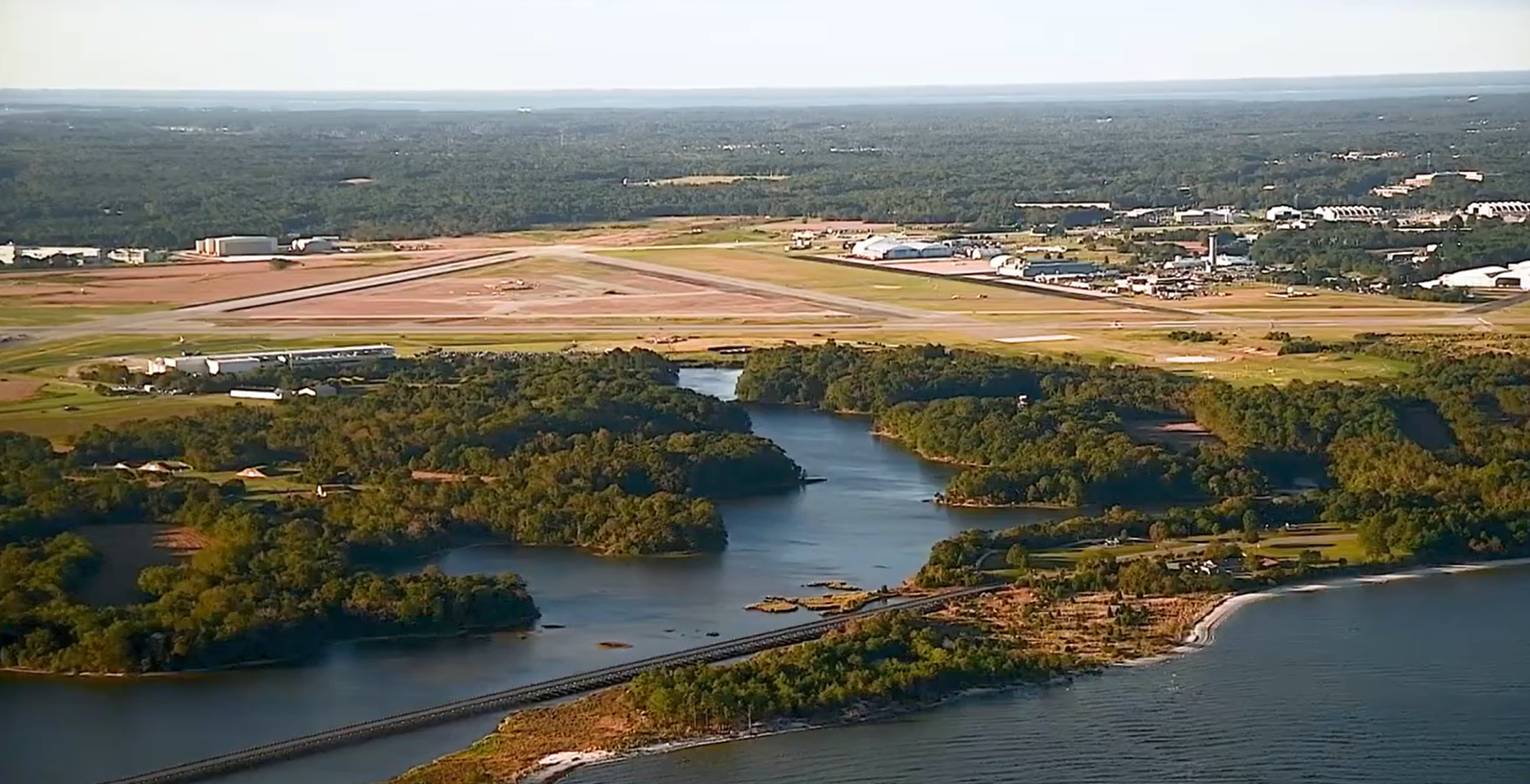
Liberation Times understands that an exotic vehicle of unknown origin has been stored for decades at Naval Air Station Patuxent River (‘Pax River’) in Maryland.
When asked, sources have declined to describe the vehicle or disclose where it was found.
However, it is understood that contingency plans may be in place to relocate the alleged craft if its current location were to be publicly identified.
Pax River is home to the headquarters of Naval Air Systems Command (NAVAIR) and is a major center for naval aviation research, development, test and evaluation.
In 2020, the NAVAIR’s FOIA reading room became the official repository for the ‘Gimbal’ and ‘GoFast’ Unidentified Anomalous Phenomena (UAP) videos, which had circulated publicly for years before their formal release.
NAVAIR describes its mission as providing ‘full life-cycle support’ for naval aviation aircraft, weapons and systems used by Sailors and Marines - covering research and development, acquisition, test and evaluation, and sustainment.
Against that backdrop, certain Naval Air Systems Command (NAVAIR) Program Executive Offices (PEOs) - the U.S. Navy’s senior acquisition organizations that manage major aviation portfolios and oversee the program offices running contracts - may have been involved in efforts to analyse and exploit alleged recovered materials, including potential reverse-engineering work.
Sources point to a broader contractor ecosystem that supports NAVAIR-managed work, including major defence primes and specialist technical organizations.
Contractors associated with NAVAIR programs have included Lockheed Martin and the MITRE Corporation, which operates Federally Funded Research and Development Centers that support the U.S. government in an advisory and technical capacity.
Former director of the Pentagon’s Unidentified Anomalous Phenomena (UAP) program, the Advanced Aerospace Threat Identification Program (AATIP), Luis Elizondo, has also placed Pax River within a broader set of alleged locations relating to alleged recovered vehicles of potential non-human origin.
In written testimony to Congress, Elizondo claimed Naval Air Station Patuxent River was among the sites prepared in connection with a transfer involving Lockheed Martin and Bigelow Aerospace. He further alleged that a hangar at the base was designed to facilitate the movement of future materials by air and by river.
That transfer of materials, which ultimately never took place, was blocked by the CIA, according to Elizondo.
The CIA’s Directorate of Science and Technology is understood by Liberation Times to be the original custodian of the materials in question, which are believed to have been recovered from as far back as the 1950s.
Liberation Times understands that, due to recruitment challenges in engineering, James Ryder, Vice President of Lockheed Martin Space Systems at the time, proposed transferring the materials to an external organization to drive technological breakthroughs.
When those efforts failed, the individuals involved reportedly pursued an alternative route in 2011, helping to establish a Prospective Special Access Program (PSAP) within the Department of Homeland Security as another mechanism to enable the transfer. That initiative also did not proceed.
Speaking to Liberation Times, multiple sources claimed that these material transfer efforts were blocked by former CIA Director of Science and Technology, Glenn Gaffney, when he held the position.
Liberation Times is unable to confirm whether the alleged exotic vehicle located at Pax River formed part of the proposed transfer.
It is known that Lockheed Skunk Works does have a significant presence at the base.
While employed at Pax River with NAVAIR, the aerospace engineer and inventor, Salvatore Pais, filed a series of patents describing unconventional propulsion and field effects - including a triangular or diamond-shaped craft that he claimed could produce anti-gravity - like behaviour - features some observers have argued resemble reported UAP shapes.
Geographically, Naval Air Station Patuxent River sits on the U.S. East Coast between Virginia and New Jersey—areas that have also drawn attention following reports of major drone incursions in 2023 and 2024.
The Navy has previously acknowledged concerns about unidentified objects operating in military-controlled airspace. In 2019, it said there had been “a number of reports of unauthorised and/or unidentified aircraft entering various military-controlled ranges and designated air space,” as it announced steps to update and formalise reporting processes for suspected incursions.
On its website, the Naval Air Warfare Center Aircraft Division (NAWCAD), which sits within NAVAIR, provides the locations of the U.S. Navy’s testing operations along the East Coast:
‘Local tests are conducted in 2,700 square miles of restricted airspace in and around the Chesapeake Bay with altitudes up to 85,000 feet. An additional 57,000 square miles of air and sea space is also available offshore over the Atlantic Ocean from New Jersey to the Carolinas, where altitude is unlimited. Real-time connectivity and partnerships with other defense entities allow ATR to extend its range and capabilities.
Sources claim that, for several years, two separate categories of platforms have conducted intelligence, surveillance and reconnaissance activity around military training and test ranges off the U.S. East Coast associated with Pax River:
Chinese-operated exotic drones, and
Vehicles of non-human origin.
More recently, those sources say the activity has intensified and expanded further inland, including around the Navy installation on the Chesapeake Bay.
Sources have claimed to Liberation Times that some of the possible surveillance activity is connected to alleged exotic materials stored at Pax River and to possible testing of platforms using technology they claim was derived from those materials.
In 2019, Aerospace America magazine asked the Pentagon whether Pax River had recently experienced a UAP incursion resembling the encounters depicted in the 2015 ‘Gimbal’ and ‘GoFast’ videos.
In internal emails released through the Freedom of Information Act, a defence official declined to address the specific question and instead emphasised that the department would not speculate publicly, and that range incursions would be investigated on a case-by-case basis. The official added, ‘no public release of range incursion information (including frequency of sightings/observations, etc.) is expected.’
Historically, claims linking Chesapeake Bay activity to sensitive activities and UAP are not new.
In ‘The Chesapeake Connection’ (copyright 1989), UAP researcher Bob Oechsler tied regional UAP reports to a wider thesis involving corporate and national-security activity, including what he characterised as top-secret experimental testing around the Chesapeake Bay area.
Oechsler recounted an incident he dated to May 1973, in which two teenage boys were fishing on the banks of the Patuxent River across from Solomons Island, near the Naval Air Test Center.
The boys claimed to have observed a large disc-shaped object across the river, accompanied by more than a dozen smaller lights.
Oechsler wrote that the boys took photographs, and that their father later showed the images to colleagues at the Patuxent River Naval Air Test Center - who, he claimed, reacted as though such incidents were not unusual.
More recently, in an interview on Jesse Michaels’ American Alchemy, a UAP researcher known as ‘UAP Gerb’ said he suspected Pax River may be connected to alleged UFO-related activity and suggested MITRE could have involvement through one of its Federally Funded Research and Development Center.
Separately, a source told Liberation Times that organizations such as MITRE can work alongside government program offices in an advisory and support capacity, helping to coordinate contractor activity and provide program support on complex portfolios.
The source said that such support could include day-to-day program functions and longer-term research and development oversight linked to any putative reverse-engineering effort involving UAP-related materials, including work undertaken by major defence contractors, such as Lockheed Martin.