Evidence, Drones and the UFO Debate
Liberation Times Opinion & Insight
Written by Franc Milburn - 10 April 2026
There were a couple of takeaways I wanted to unpack from my latest long paper, which can be downloaded here:

The first and most immediately obvious takeaway is that European NATO states have major problems of their own in the Baltic Sea, North Sea, Black Sea, Atlantic Ocean, Arctic and English Channel, just as President Trump wants them to deploy scarce, precious naval resources to the Straits of Hormuz.
NATO European Union states were woefully unprepared for the Russian hybrid war blowback as a result of the February 2022 (third) invasion of Ukraine.
This will be obvious to anyone who has been following my reporting of this since December 2024, and my latest long paper above delves further.
The second takeaway is less immediately obvious, but still important.
Figures inside and outside the UFO community regularly criticise a wide range of targets, often with good reason.
These include closed-minded debunkers who cherry-pick facts, portray interest in UFOs as gullibility or irrationality, and spread disinformation.
They also include Inspectors General who fail to investigate properly, mainstream media outlets that have long mocked the UFO issue or misreported it, and journalists who have worked to discredit whistleblowers.
Beyond that, the Pentagon’s dedicated UFO office, the All-domain Anomaly Resolution Office (AARO), along with elements of the U.S. government and alleged legacy programs, stand accused of concealing a non-human, high-strangeness reality.
Even that, however, is only part of the story.
But why should anyone outside the UFO community take the subject seriously when a significant number within it do not apply serious standards themselves? I wrote in my very first piece on the UFO-drone topic back in December 2024:
“Unfortunately, X / Twitter has been rife with misinformation and erroneous speculation, mostly due to accounts seeking to boost engagement… I am not ruling out presence of more exotic technology or UAP [Unidentified Anomalous Phenomena], but rather attempting to put forward a more prosaic assessment in light of the information we do have.”
That didn’t go down at all well and elicited exactly the kind of group loyalty, confirmation bias and resistance to contrary evidence that critics often accuse the community of displaying.
A good deal of feedback came my way, including from individuals who did not appear to have the professional or technical background needed to evaluate the research fully, especially given the apparent lack of original research on their part.
In my last Op-ed in February, I wrote:
“The aim [of my last long paper] is straightforward: if we want the public to take genuinely anomalous reports seriously, we need to apply the same standards of evidence and intellectual rigour when incidents appear to involve drones.”
When I said in December 2024 that unidentified objects seen around Royal Air Force bases could be Russian drones, including some potentially launched from offshore, some dismissed the idea as impossible on grounds that I believed were deeply flawed.
Recently, in the Baltic Sea, a Russian spy ship targeted a French aircraft carrier with a drone, as I assess in full within my latest paper. There are also official public statements from the European Union, the UK and Ukraine confirming the Russia threat and risk of drone launches from vessels.
In December 2024, there was a flurry of commentary about a ‘UFO and nuke’ connection at RAF Lakenheath in November 2024. No, there wasn’t – as I proved in two papers – even as the repeated misinterpretation and speculative thinking continue to this day.
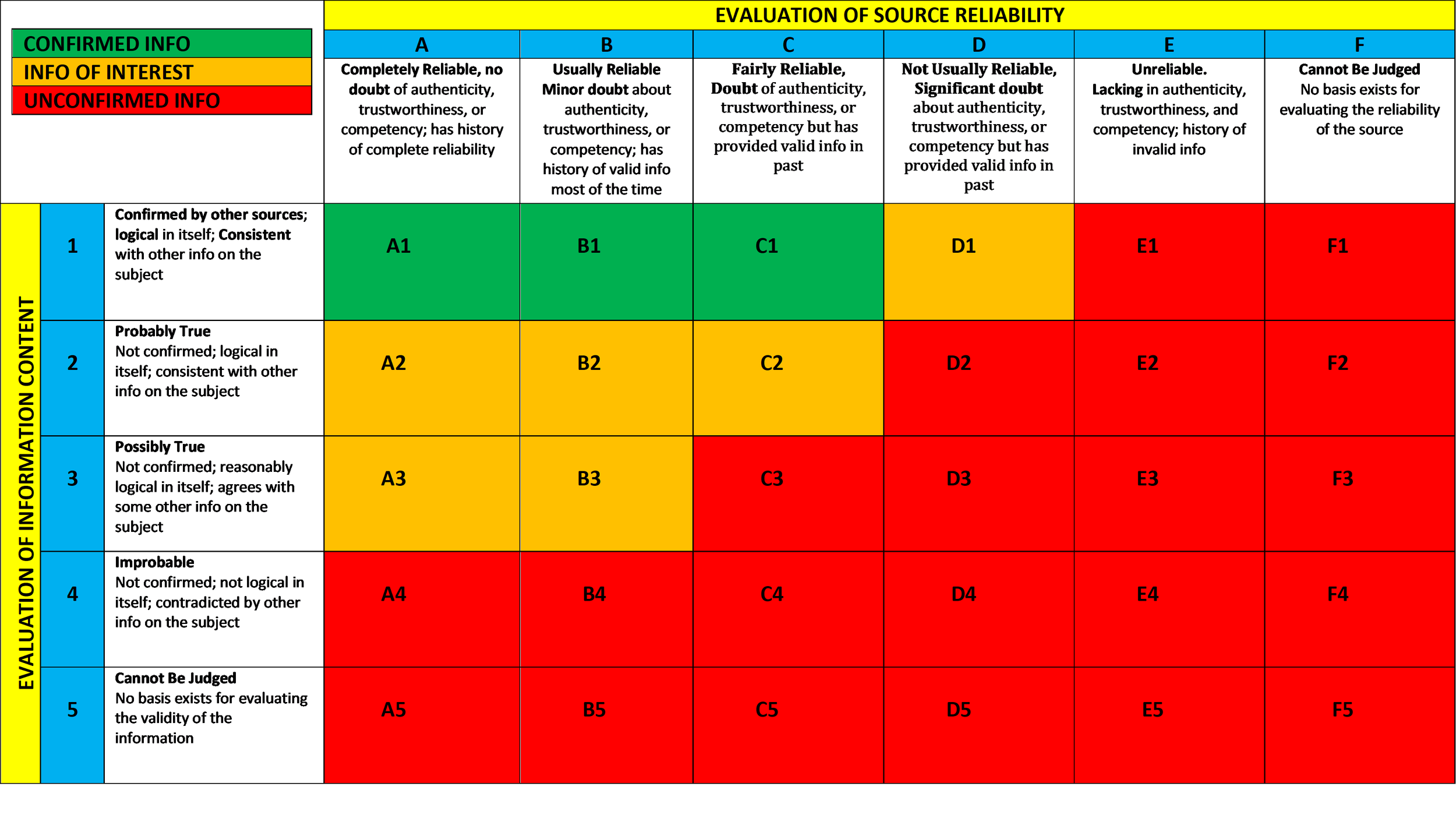
Meanwhile, to help us assess sources and information, I present a useful chart.
I did suggest this in my first-ever paper on UAP in 2020, produced for a globally-ranked university think tank.