The Searcher: A Therapist's Journey to Find the General
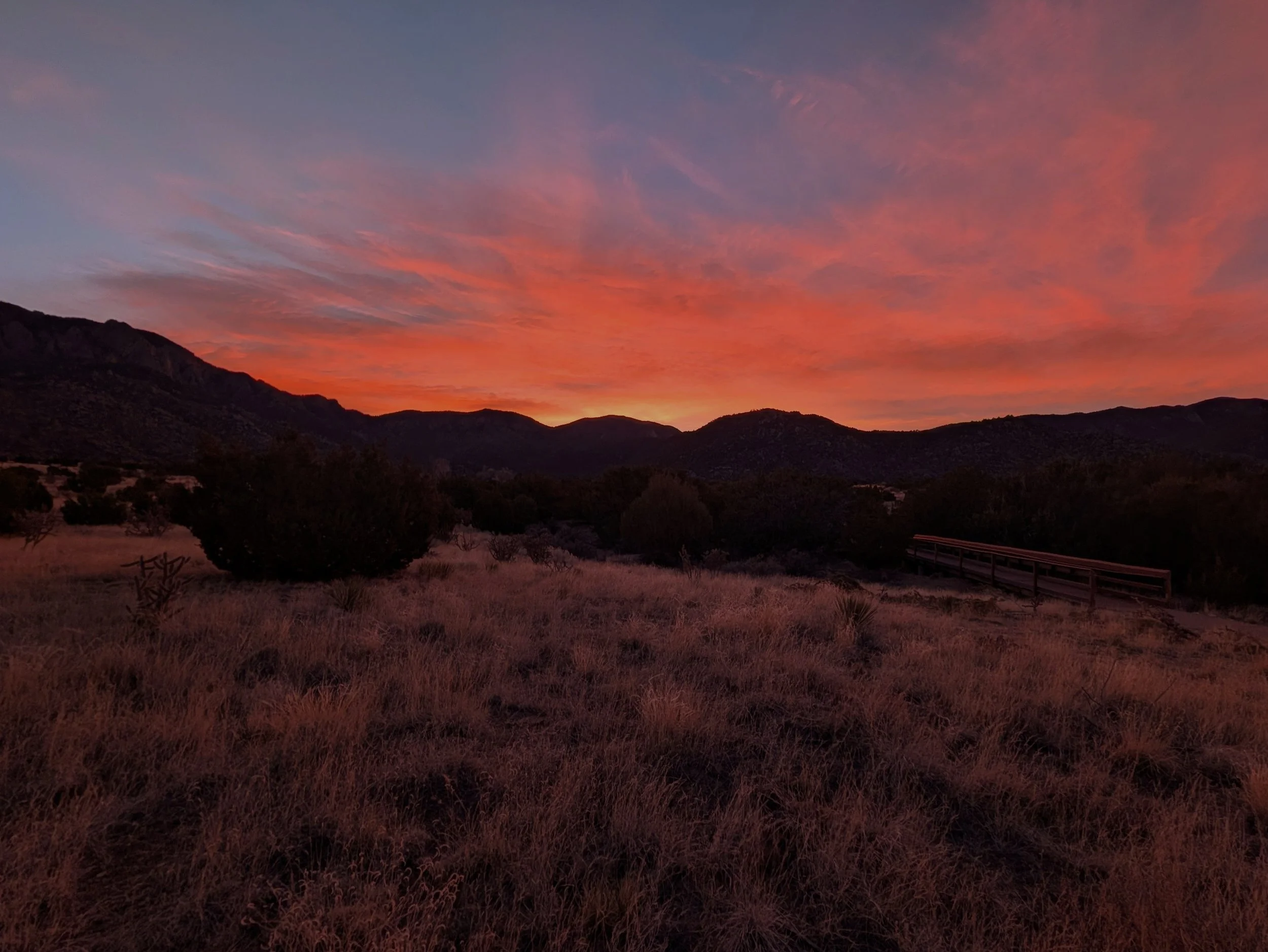
Above: Elena Gallegos Open Space
Written by Erik Schlimmer, MSW, LCSW - 3 July 2026
During the night of March 14, I drove from my home in Colorado's San Luis Valley to the outskirts of Albuquerque, where I staged to begin a search at dawn.
I slept in the back of my SUV at an isolated trailhead, and, despite the Desert Southwest setting, the temperature dropped to the freezing point.
The inside of my vehicle felt as cozy as a chest freezer. The man I sought was no ordinary lost hiker. It was retired Air Force Major General William "Neil" McCasland, the former commander of the Air Force Research Laboratory and director of that branch's space acquisition program.
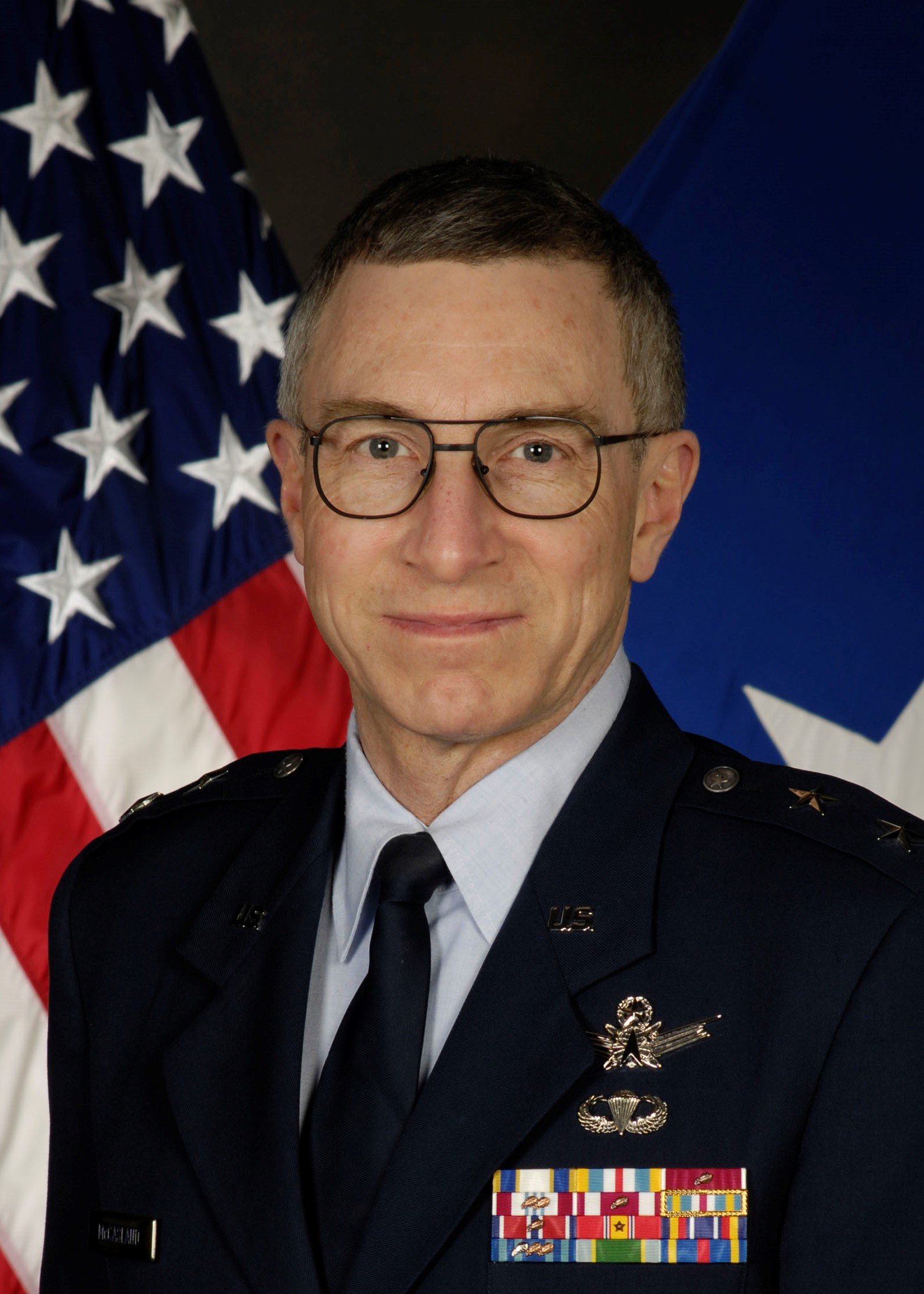
Above: Retired U.S. Air Force General William ‘Neil’ McCasland
He had managed a $2.2 billion science and technology budget, led a workforce of 11,000, and held a PhD in Astronautical Engineering from MIT.
The two-star held levels of responsibility most officers could only dream of. He worked on programs most military members would never hear of.
This was not the type of person who simply vanished.
Yet on February 27, 2026, that is precisely what happened.
McCasland left his home on Quail Run Court Northeast on Albuquerque's east side at approximately 11:30 a.m.
When his wife, Susan McCasland Wilkerson, returned from a medical appointment at 12:04 p.m., she realised he was gone.
Friends and family couldn't locate him. Wilkerson reported her husband missing at 3:07 p.m.
The Bernalillo County Sheriff's Office (BCSO) then issued a Silver Alert. This type of notice is for missing seniors and is modelled after the Amber Alert for missing children.
According to the City of Albuquerque, a Silver Alert "informs the public about missing adults over the age of 50, with irreversible cognitive impairments such as Alzheimer's or dementia disease."
At the time of his disappearance, the general was 68 years old. His wife informed BCSO that he was suffering from anxiety, memory loss, and insomnia.
Despite the efforts of deputies, professional searchers, and volunteers supported by K-9s, drones, and helicopters equipped with forward-looking infrared technology, an initial ten-day intensive search proved fruitless.
On about March 12, fourteen days after the general went missing, field operations were scaled back to be basically nonexistent.
I travelled to New Mexico on day sixteen of his disappearance not to challenge previous search efforts, but to support them.
I was not there to seek notoriety, though near the end of my trip a NewsNation team did interview me.
Despite theories of the general being carried away in a UFO, kidnapped by Chinese operatives, or whisked away to a government safe house, I have a fairly conventional theory. Evidence suggests he may have died on public land near his neighborhood the day he went missing.
I'm a good candidate to find someone like McCasland. As a trained search and rescue responder and former backcountry ranger, I can execute high-level searches through inhospitable conditions.
As a former Army paratrooper, I carry with me a natural bond with veterans as well as military mantras that keep me from quitting – "Suck it up," "Drive on," and "Always complete the mission."
As a practicing mental health therapist, I grasp the decisions people make when under stress and staring hopelessness in the face.
So, I went to New Mexico.
Into the Wild
March 15, 16, and 17 seemed a blur as I lay in my sleeping bag the morning of the final day of my quest. It was 6:15, an hour before sunrise.
I groggily hunkered in my down bag, trying to ignore the aches in my legs and heaviness in my shoulders. I had searched for three days. I hadn't showered in five. I rubbed the sleep from my eyes, fired up my backpacking stove, and made a batch of oatmeal alongside a strong cup of coffee. The oatmeal tasted like plywood. The coffee was good.
Dawn was threatening to wash the stars away. I packed up camp and drove the twenty minutes to the Cottonwood Springs trailhead in 640-acre Elena Gallegos Open Space. The trailhead is a mile east of McCasland's home. I got there as the sun rose over the 10,000-foot Sandia Mountains to the east. The base of this range marked the eastern limit of the 3,000-acre search area I mapped out.
I shouldered my pack. It felt heavier than usual, though my search gear never changes. Inside were three quarts of water, binoculars, map and compass, smartphone, battery brick, roll of surveyor's tape, notepad and pencil, first aid kit, tarp, headlamp, backup headlamp, blaze orange fabric signal panel, warm clothes, and a pouch of high-energy food.
I hiked a mile into the Sandia foothills, left the trail, and started methodically weaving back and forth across gravelly canyons and grassy plains. The day prior, I had quickly bypassed this area so I could explore a remote section of adjacent Cibola National Forest.
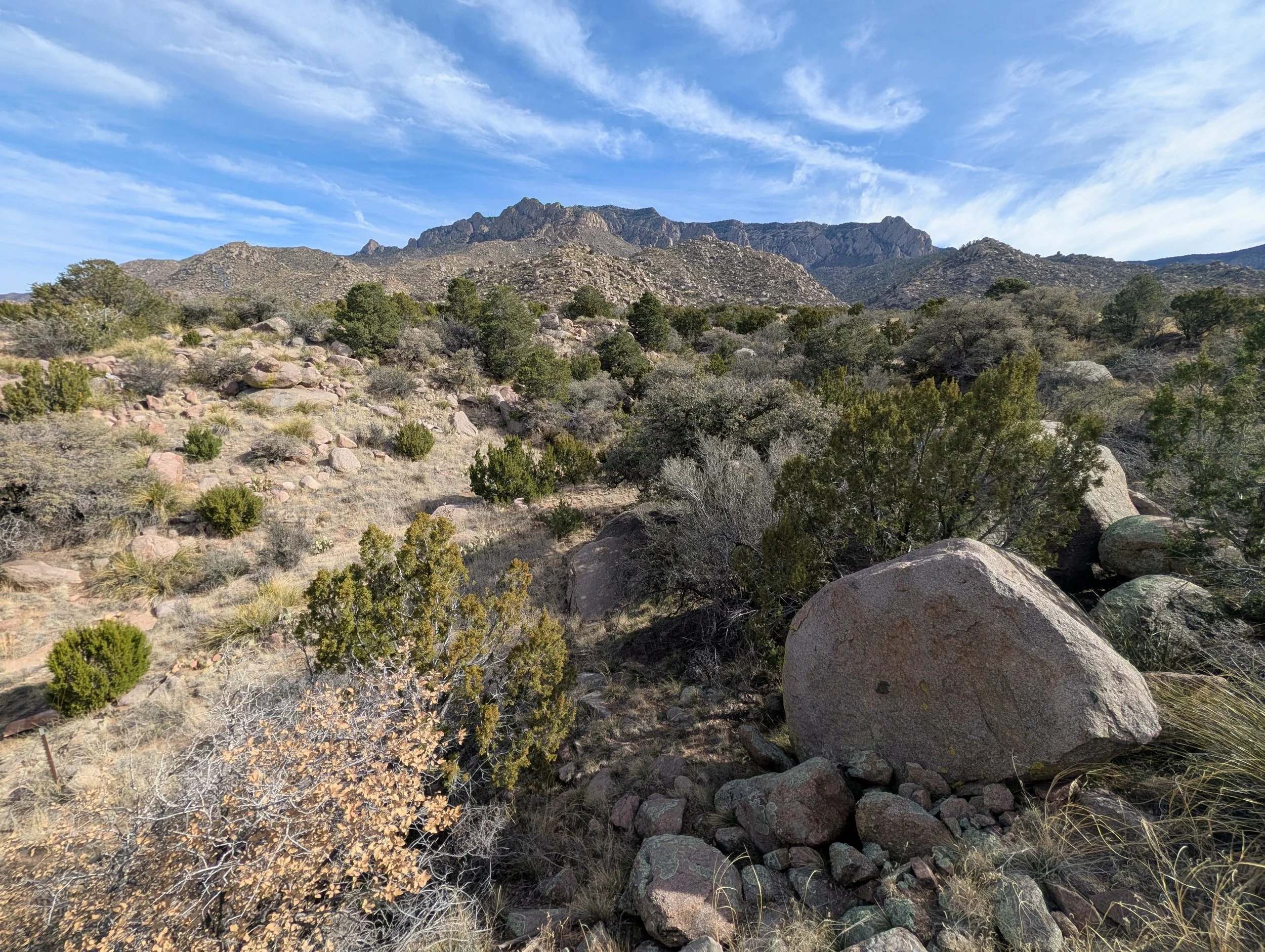
Above: 10,000-foot Sandia Mountains that marked the eastern extent of my search area
Like with the other days of searching, I would remain off-trail. The general wasn't out wandering trails.
By noon, I was smoked. It was 85 degrees. The piercing New Mexico sun roasted my shoulders. It was time to rest and assess. As I sat in the shade of a scrubby pine, I drank and ate and examined my maps.
My search area looked enormous. I recalled what BCSO sheriff John Allen said during a March 16 press conference. "It's vast. It's a lot of square mileage."
I got back on my feet and moved like a hunter, silent and steady. Whenever I encountered a vantage point, I used my binoculars to scan the landscape. I was hoping to catch a glimpse of something that stood out, something that didn't naturally belong. I traversed back and forth, poked my head around boulders, and gave everything a second or third look. Nothing.
I doubled back toward the trailhead for a sweep of Pino Canyon.
Field observations suggest McCasland followed this canyon from his neighborhood into Elena Gallegos Open Space on February 27. A U.S. Air Force sweatshirt was found in the canyon on March 7.
I knew the sweatshirt was never positively identified as McCasland's and that BCSO deputies grid searched the canyon, but another look wouldn't hurt. Still nothing. Not only had I not seen the general. I hadn't seen another searcher.
I trudged the final half-mile back to my car. Back at Cottonwood Springs trailhead, I dropped my pack, wiped the sweat from my brow, and gazed back at the hills.
Sure, a shower would feel good, and it would be nice to go home, but the paratrooper ethos, "Always complete the mission," ate at me. I had failed my mission. But not for lack of effort.
For three days I scoured frontcountry terrain in Elena Gallegos Open Space, focusing on a collection of hills two miles northeast of Pino Canyon. I called the area the Boulder Meadows because it is saturated with rocks, some as big as houses. Geographical evidence indicates this area could have been the final stopping point for the general.
It's neither too proximate nor too distant from his neighborhood. It's neither too rugged nor too easy to access.
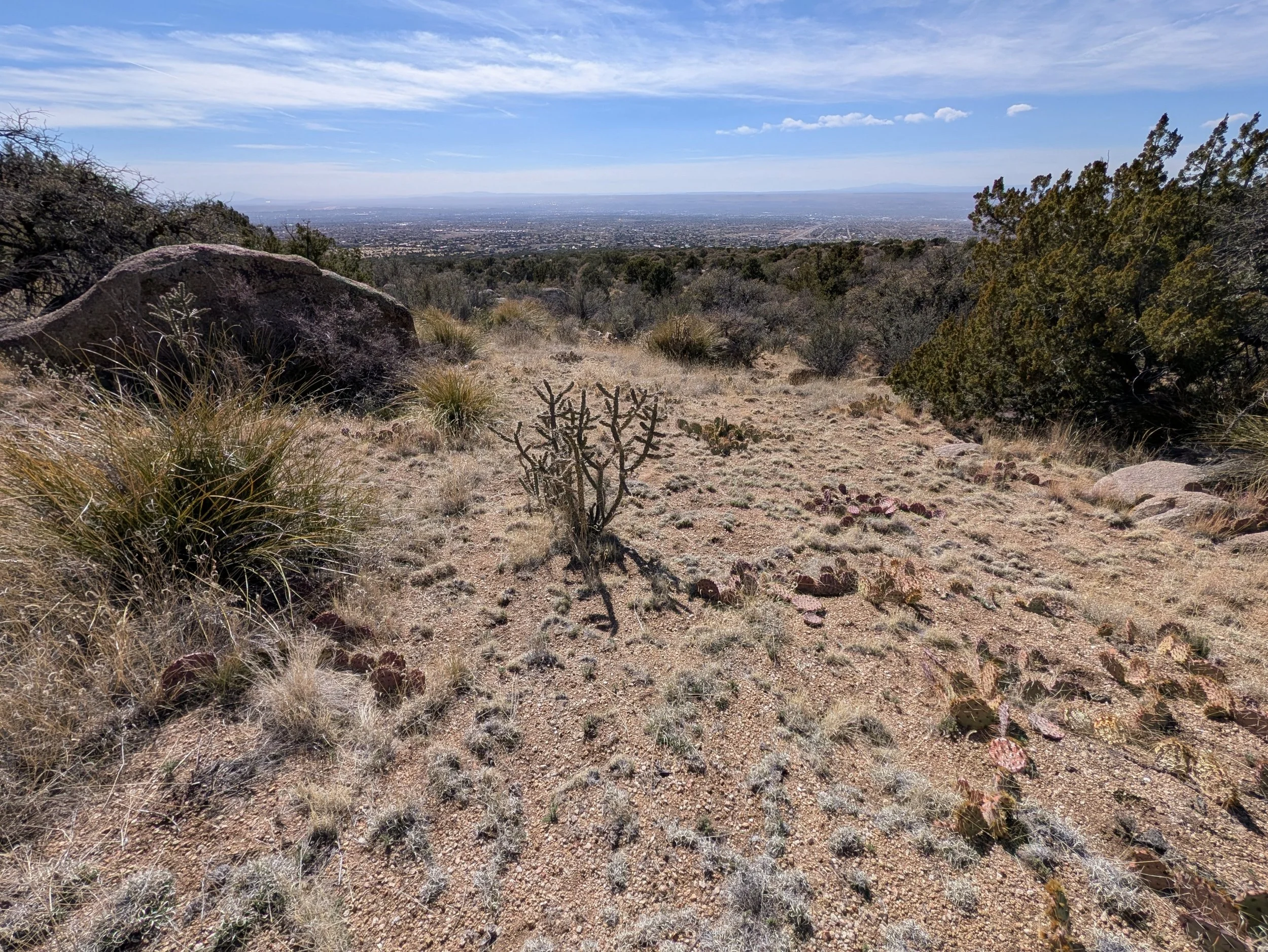
Above: In Elena Gallegos Open Space looking back into Albuquerque
For one day, I explored backcountry terrain in Cibola National Forest beyond the open space, focusing on two canyons.
I trekked up Cañón de Domingo Baca, explored its nooks and crannies, and detoured up a side canyon. I followed it for over a mile to the eastern boundary of my search area. At my turnaround point, I found a sun-bleached bear skull, which only made the place feel lonelier.
I searched for 34 hours, hiked 40 miles, and climbed 10,000 vertical feet. I cleared 8.5 million square feet of terrain, the equivalent of 150 football fields. Searches like that aren't based on vague possibilities. They're based on cold, hard data and evidence.
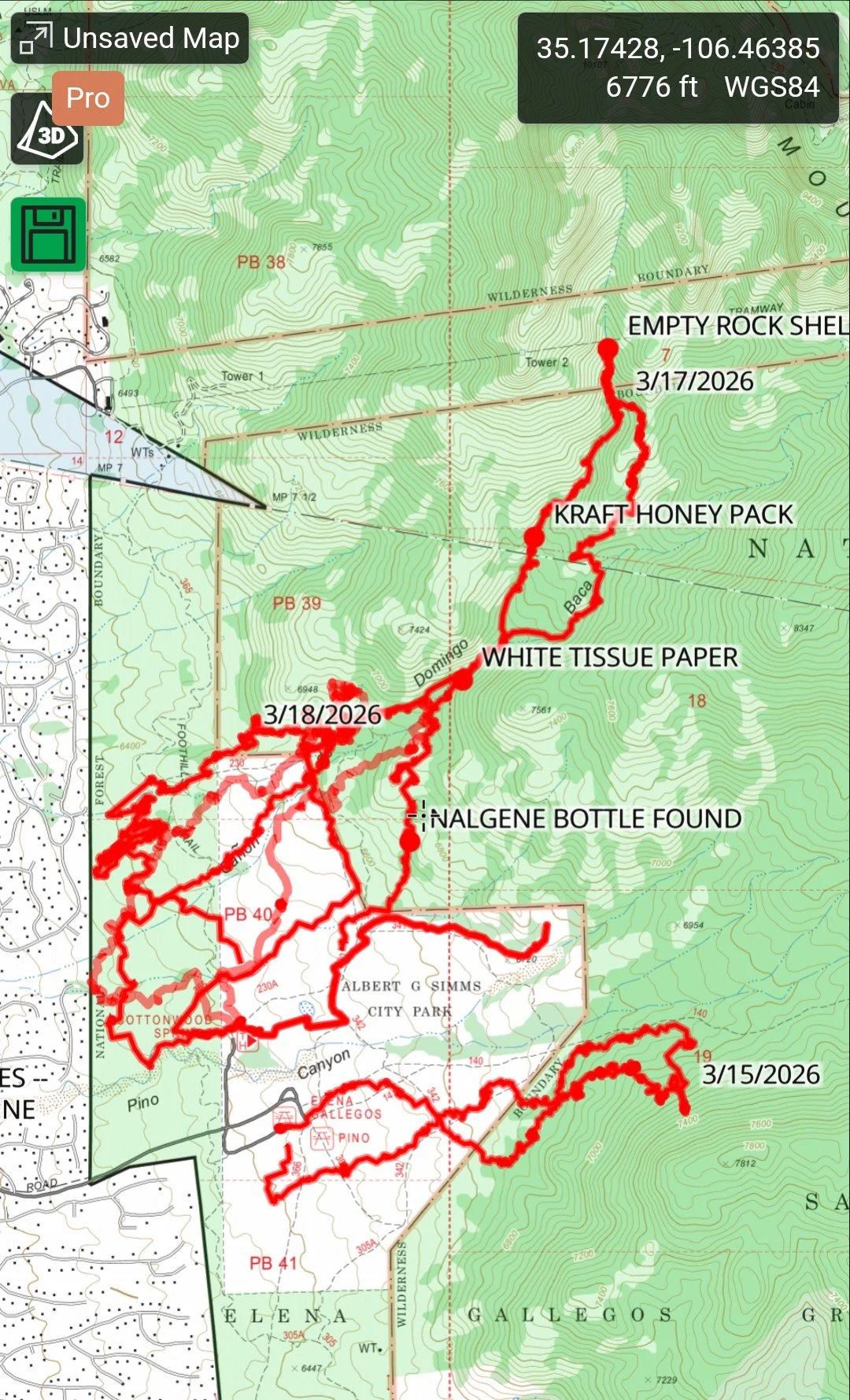
Above: Log of search tracks, 8.5-million square feet cleared
Possibilities, Probabilities, and Conflation
From the perspective of a searcher, veteran, and mental health professional, the primary groups following this case – the media, the UFO community, and freelance searchers – probably got their theories wrong regarding what happened to the general.
The media linked McCasland's disappearance to the disappearances or deaths of scientists despite no evidence suggesting a connection.
Frankly, I don't believe the scientist cases are connected to begin with. Most of the deceased or missing individuals operated in different fields under different agencies and never crossed paths with McCasland.
Treating a collection of distinct tragedies as a coordinated plot ignores investigative data. No law enforcement agency has linked any of the cases.
The media made spectacular efforts to link the disappearance of McCasland with the disappearance of materials scientist Monica Reza, who vanished in Los Angeles National Forest on June 22 of last year. Evidence leans toward another fairly conventional theory.
In many cases, lost-person behavior follows a familiar pattern in the mountains. The person steps off the trail, becomes disoriented, does not call out for help, and is unable to find their way out. The lost hiker becomes frantic, which corrupts decision-making and physically exhausts them. Soon they have no food, no water, and no plan. They are forced to spend an unexpected night or two in the open, and one chilly night ends their suffering.
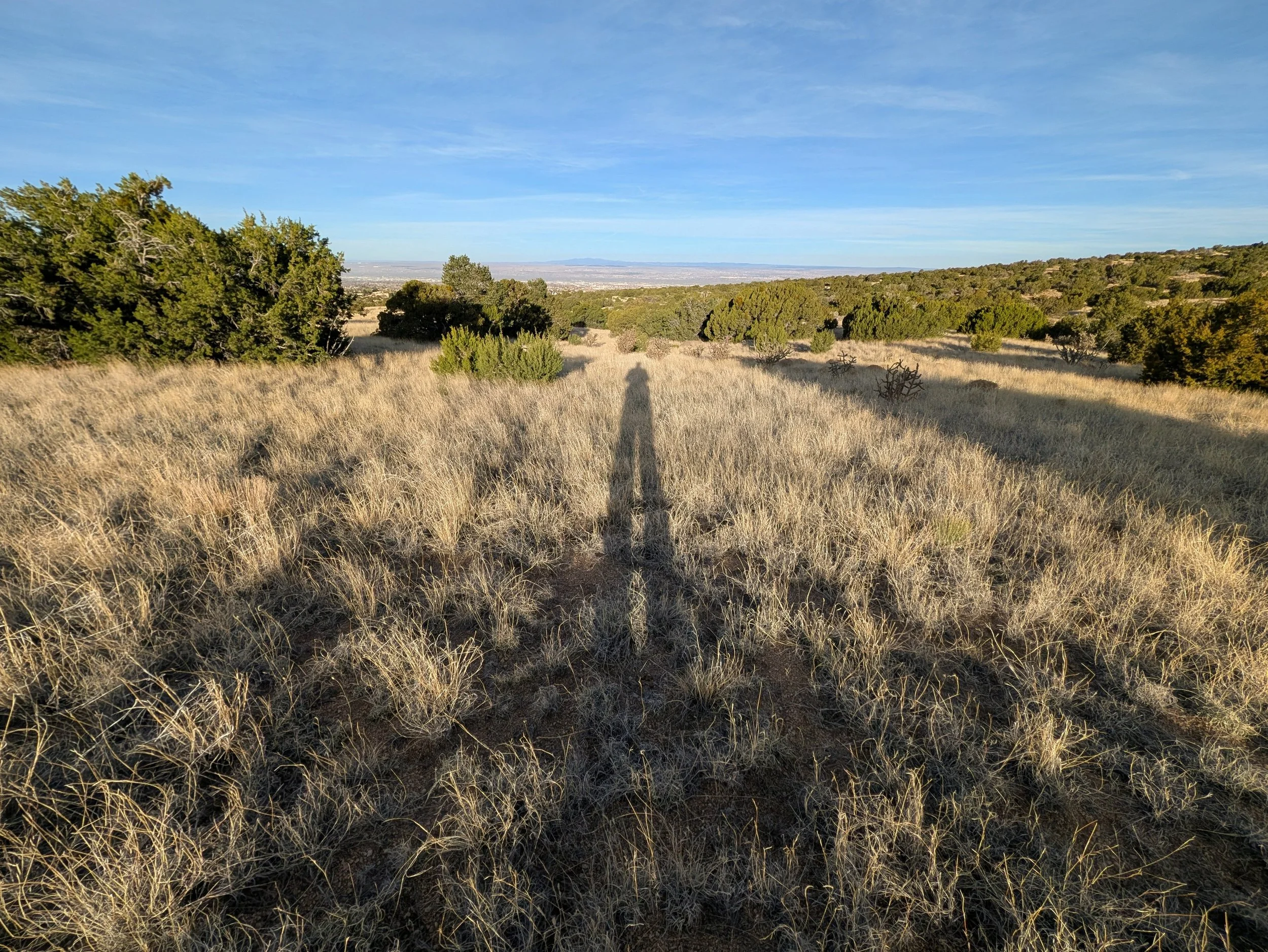
Above: Searching early in the morning, before the searing heat
The UFO community's most popular theory is that the general was tracked by the Pentagon since retirement and was secreted away to a safehouse as disclosure unfolds.
Unhelpful tips were sent to BCSO frequently enough that reporters at the March 16 presser asked lieutenant Kyle Woods about it. He responded, "There are some tips with some outlandish theories, conspiracy theories."
Woods made clear that those tips couldn't be investigated because they lacked foundational truths. With a flat tone, he stated, "We can only go off of fact at this point."
Despite BCSO being consistently firm though transparent, rumors are still swirling and weaving their ways into popular media platforms.
On June 18, a popular author know for his purported experiences with nonhuman intelligence (NHI) appeared on an equally popular podcast. The author theorized the general was abducted by aliens so they could "sift through his mind," find out who he knew, and then abduct the general's friends and colleagues, too.
One week later, the Daily Mail published an article by Chris Melore that portrayed the general's disappearance akin to something out of a Jason Bourne film.
Melore reported that McCasland "was trying to escape a secret Pentagon network," which means he is "at the heart of the so-called missing scientist investigation."
BCSO addressed these matters on June 27, when a public information officer (PIO) told Los Angeles Magazine's Lauren Conlin that information recently presented by the media was "inaccurate and boosted by speculation, not evidence."
The PIO rebutted reports that the general worked in shadowy Pentagon units, made "desperate attempts" to leave consulting positions, or held active high-level security clearances. However, he did confirm "no known connection" between McCasland's disappearance and any missing or dead scientists.
Nonetheless, on July 1, Conlin wrote of a Canadian "internationally trained geographic profiler" named Douglas MacGregor, who finds it impossible that McCasland walked away from his neighborhood undetected.
MacGregor also thinks the search area is inadequate and that "foul play" is a "reasonable possibility." MacGregor has no mental health expertise, and it appears he has not visited the actual search area himself.
Freelance searchers' hearts are in the right place, though their deductions lack grounding in established search methodology based on demographic and personal characteristics.
Two freelance searchers in particular invited me to collaborate, but due to their unsound methodologies, I was forced to decline.
One claimed to be a remote viewer, though she could not locate McCasland via that method. Besides, she had already deduced he was taken via a "military-trained extraction."
The team was able to find the general because, according to this person, the DOD "chips all high-profile personnel and can locate them anywhere in the world." Popular voices of the UFO community have echoed these claims.
Another searcher who planned on looking for the general beginning June 21 sent me documents designed to persuade people to buy him $11,000 of gear for a weeklong search.
His strategy included exploring a supposed urban subterranean culvert system. However, the chances of finding a two-star general in a rumored tunnel complex are extraordinarily slim, which is why this searcher was unsuccessful.
I did not engage in remote viewing, tailor my search for foul play, or crawl into the greater Albuquerque wastewater system. I have not monetized a tragedy. My four-day expedition cost $150, which I paid for out of my own pocket.
Ensuring my search was self-funded isn't something that should be applauded, though. It's that financial gain sourced from personal tragedy should be publicly scrutinized.
Eight-Factor Influential Matrix
While earning my Master's in Social Work, during the spring 2017 semester, I wrote a 4,000- word paper for an advanced policy class. Students completed coursework during the first two-thirds of the semester and transitioned to writing and presenting their research papers during the final one-third. My project was "Suicide in Ageing and Elderly Veteran Populations."
Of course, I had no idea that nine years later I would be searching for a missing elderly veteran in the deserts of New Mexico. But that's precisely what happened, and I now find the concluding sentence of that paper foreboding: "After collecting and interpreting quantitative and qualitative data germane to ageing and elderly veteran outcomes, a grim conclusion has been reached regarding the risk of self-determined death among this population."
As I did for that paper, my theoretical framework regarding the fate of the general relies on clinical, statistical, and demographical data. I am not claiming special insider information – I examined the data and let it take me wherever it wanted. I am not diagnosing – I examined the public statements and let them speak for themselves.
Evidence that supports a certain finding is presented in the "Influential Matrix" composed of eight factors that influence certain outcomes. But first, consider the following baseline hypothesis that aligns with the search methodologies of the Bernalillo County Sheriff's Office.
Examination of relevant data and characteristics unique to McCasland's profile reasonably suggests he left his home on foot, walked the 600 feet to Pino Canyon, and followed it east for a mile to the western boundary of the open space.
This departure was not captured on home cameras because they don't face the canyon. Just beyond the boundary, he may have dropped that U.S. Air Force sweatshirt.
Then he would have cut left – northeast – to avoid people at Cottonwood Springs trailhead directly ahead. Examination of broad topographical and personal characteristics suggests that if McCasland died in the area, his remains are likely located a few miles northeast of his home, specifically in the Boulder Meadows of the open space or close to Cañón de Domingo Baca of the national forest.
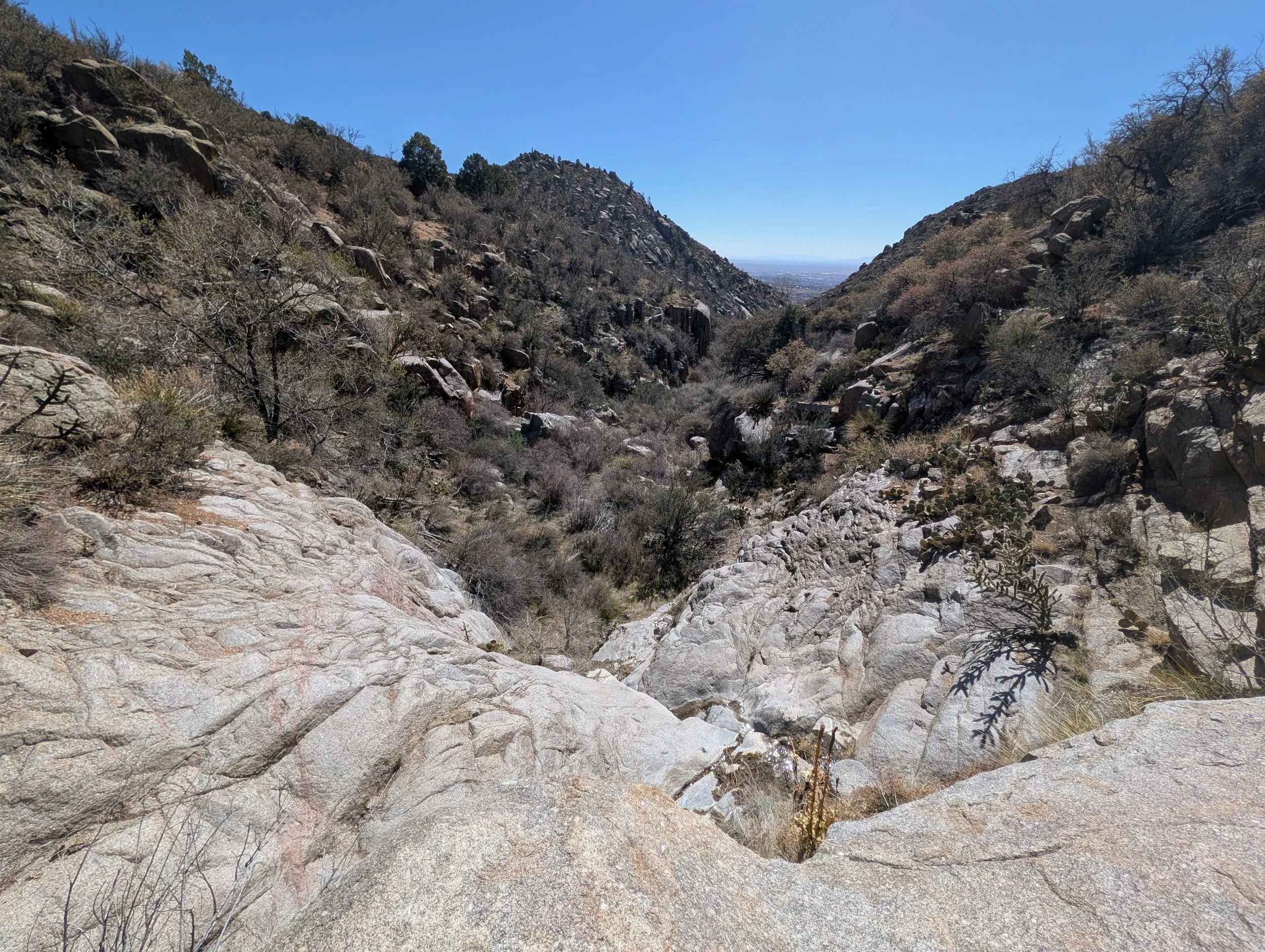
Above: Steep, narrow, and remote side canyon of Cañón de Domingo Baca
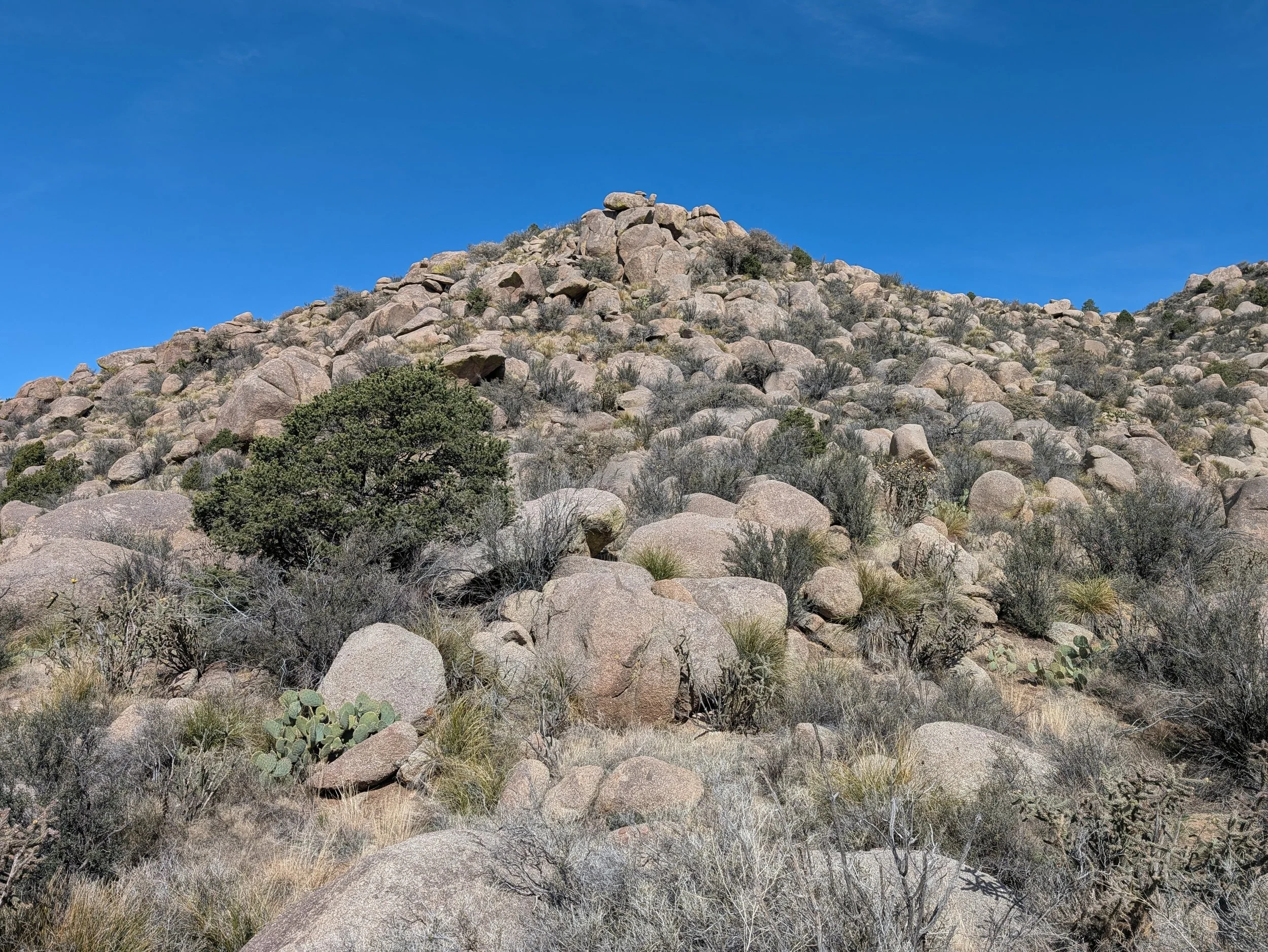
Above: "Boulder Meadows" where the open space meets the national forest
Similar cases suggest a final spot not visible from the air or a trail. From this spot you cannot see his neighborhood. If this hypothesis proves correct, McCasland and his wallet with identification, red daypack, handgun holster, and .38 revolver will be purposefully discovered by a searcher or accidentally stumbled upon by a hiker.
Factor I: Male
Being male is the number one epidemiological factor that influences risk.
While women attempt to take their lives more often per capita, men die more often because they choose more lethal means. In 2023, men accounted for 95% of veteran suicides.
Risk is heightened by patterns of negative outcomes. When compared to their female counterparts, males are overwhelmingly more likely to develop addictions, become homeless, be incarcerated, and suffer chronic pain, for example.
Factor II: Veteran
Veterans experience a disproportionately higher rate of suicide compared to nonveterans. The veteran rate in 2023 stood at 35 per 100,000 – double that of non-veterans.
During my own lifetime, I have carried the grief of losing nine people this way.
Three were veterans. Military culture dictates that no matter how much one may be suffering, the default "I'm good" mantra prevails, which muddies risk assessment.
Factor III: Wellbeing
The general's wife reported he was suffering from "anxiety, short-term memory loss, lack of sleep."
These create psychological vulnerabilities. Epidemiological data shows that for many high-functioning individuals, an unanticipated drop in quality of life can elevate risk.
Specific to insomnia, among veterans who committed suicide in 2023, 39% had sleep issues.
Factor IV: Impulsivity
Though we hope to notice gradual decline and intervene, there are often no unmistakable signs. Among veterans who took their lives in 2023, a quarter suffered from chronic impulsivity. Studies of those who attempted to take their own lives show that half made attempts within ten minutes of considering it. If you are going to remember anything from this article, remember this: No combination is more dangerous than impulsivity and firearms.
Factor V: Firearms
Access to a gun determines whether a crisis becomes a tragedy. Firearm use accounts for three-quarters of veteran suicides. As age increases, chances of using this method increase in parallel.
For veterans McCasland's age, firearms are used 74% of the time. For veterans 75 and older, it's almost 90%. It has been publicly stated that McCasland did not normally bring his gun while hiking.
Factor VI: Privacy
Most victims hide their pain, only two out of ten leave notes, and many retreat to privacy. Pattern recognition suggests McCasland did not leave his smartphone and smartwatch at home so he couldn't be tracked.
It suggests they were left to create privacy. During her 911 call, Wilkerson reported, "I have some indication that he must have planned not to be found."
Factor VII: Stoicism
McCasland had three layers of stoicism: male, veteran, American. Reliance on oneself increases with age. For example, the population least likely to contact the Veterans Crisis Line is those 70 years old and older.
It has been publicly reported that McCasland was suffering from physical and psychological issues and had lost twenty pounds. Some individuals in similar circumstances report feeling like a burden.
Factor VIII: Springtime
The belief that these types of deaths spike during Christmas is untrue. Actually, these tragedies drop to their lowest rates during the holidays when privacy is sparse. They spike during spring.
The person who is suffering is relying on a fresh start – "The promise of spring." The season arrives, the agony remains, and the most lethal emotion, hopelessness, becomes unshakable. McCasland vanished during late February, which is "spring" in Albuquerque.
New Horizons
The resolution to McCasland's disappearance is out there, and locating it requires tracking the facts wherever they may lead.
Watching a family endure the agonizing suspense of an unresolved disappearance is profound.
Knowing someone has been swallowed by the mountains but not knowing if they are alive is a tightrope no one should be forced to walk.
The general's family and friends deserve facts. To extend their suffering with sensationalism is an act of disregard.
I applaud Liberation Times for allowing this space to exist, where data can be presented squarely.
It is a painful subject to discuss.
Many times while writing this article, I had to step away because losing people in this manner is not new to me.
While stigma protects us from being hurt because it silences honest discourse, that doesn't mean it's best.
Besides stigma, conversations have been hushed due to the understandable caution surrounding unresolved cases.
After all, it was the great thinker Thomas Sowell who opined, "There are only two ways of telling the complete truth – anonymously and posthumously."
Though risk aversion is innate, we can still honor U.S. Air Force Major General William "Neil" McCasland while remaining anchored in objectivity.
My next four-day search is already planned.
Though little new information has emerged from BCSO, with whom I’ve been in contact since my initial search, I will be back. Down in New Mexico, traversing back and forth, poking my head around boulders, and giving everything a second or third look.