On the Brink? UFO Disclosure Speech Believed to Have Been Prepared for Trump Amid Expanding White House Push
Written by Christopher Sharp - 21 July 2026
On the brink - or facing another false dawn.
It’s difficult to tell.
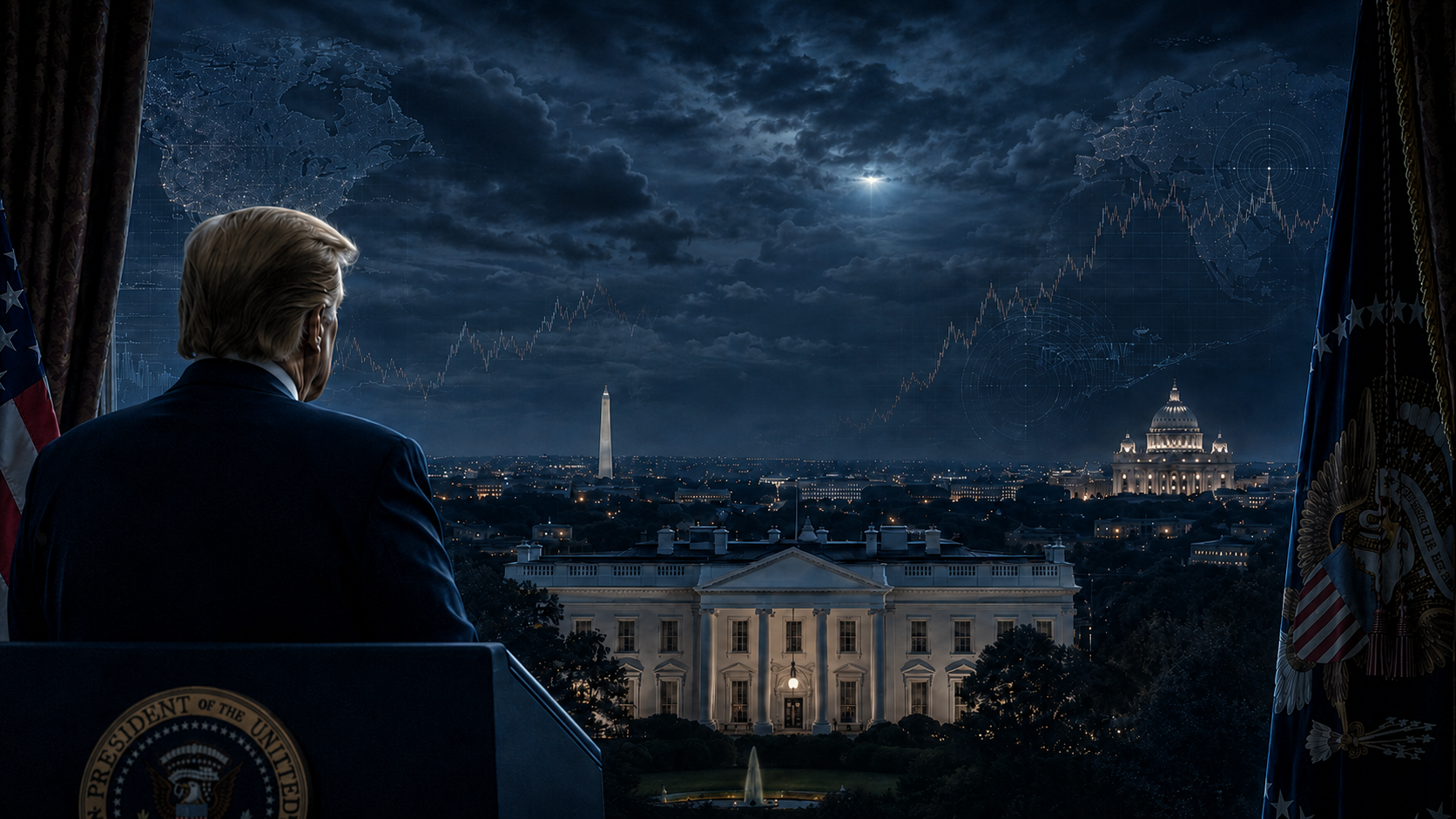
Liberation Times understands from multiple sources that a presidential speech confirming that some UFOs are of non-human origin has been prepared.
Whether President Donald Trump ever delivers it is anyone’s guess.
Presidential teams have long prepared contingency speeches and statements for events that may never occur. The existence of a draft therefore does not, by itself, mean that a final decision has been taken to deliver it.
Trump is understood to have little personal interest in the subject.
But this is a president deeply preoccupied with greatness and his place in history - whether through having a road named in his honour or seeking to bring Greenland under US control.
Faced with an opportunity to define his presidency and secure an unparalleled legacy, ego may ultimately outweigh indifference.
Liberation Times understands that several UAP disclosure advocates, some operating independently of one another, are lobbying the Trump White House to go beyond the measures announced so far.
So far, the White House’s disclosure plan appears to mirror one developed by retired Rear Admiral Tim Gallaudet, who served as acting administrator of NOAA during Trump’s first presidency.
In early 2025, he met with officials from the Trump Administration to discuss a comprehensive, whole-of-government approach to UFOs, otherwise known as Unidentified Anomalous Phenomena (UAP)
Gallaudet had previously gone on record to outline his plan for UAP disclosure.
A White House-directed policy issued through an executive order or presidential memorandum
The establishment of an interagency group, chaired by a senior White House official or Cabinet member, to coordinate a strategy and lead efforts
Legislation passed in Congress aligned with White House policy, ensuring coordination between the executive branch and interagency efforts.
The first two elements of Gallaudet’s plan now appear to have materialised, at least in substance.
Trump directed agencies to begin identifying and releasing UAP-related records, while an interagency UAP Governance Board - supported by a new Science Advisory Council - has been created to coordinate the administration’s efforts.
The third element may now be taking shape in Congress.
The House is expected to consider a proposal from Congressman Eric Burlison that would create an independent review board with the authority to search across government for UAP records and determine what should be released publicly.
It would also empower the federal government to take possession - while providing compensation - of any technology of unknown origin or biological evidence of non-human intelligence held by private companies or individuals.
A broadly similar proposal has been introduced in the Senate, although neither measure has yet passed and their final form remains uncertain.
But events could yet overtake the congressional process if Trump chooses to act before any legislation is enacted.
According to Fox News, Trump has directed agencies to waive previous nondisclosure agreements for former government employees and contractors who share UAP information through authorised government channels.
Lue Elizondo, the former head of the Pentagon’s Advanced Aerospace Threat Identification Program, has argued that those involved in alleged legacy programs may require amnesty, immunity and even witness protection.
It is not yet clear whether Trump’s directive provides broader protections such as amnesty or immunity.
Although it does not authorise public disclosure, it creates a formal route for insiders to approach investigators - meaning one of the conditions considered essential for accelerating disclosure may now be falling into place.
By allowing officials to test claims from purported firsthand witnesses, the process could give Trump greater confidence in the evidence before deciding whether to deliver the disclosure speech understood to have been prepared.
Within the White House, Trump’s powerful deputy chief of staff, Stephen Miller, has emerged as a central figure in the effort. Congressman Burlison has described the administration, working through Miller, as “aggressively pursuing” UAP disclosure.
Given Trump’s preoccupation with legacy - and his inherent unpredictability - he may yet choose to deliver the speech prepared for him.
If he does, the announcement itself would be only the beginning. The White House would then face the far more delicate task of helping the public understand and absorb its implications.
One figure who could assist in that effort is television psychologist Phil McGraw, better known as Dr Phil. As a familiar broadcaster and prominent Trump ally, McGraw could provide the administration with a recognisable mainstream voice through which to explore the psychological and societal consequences of disclosure.
His team was recently given an early look at the fourth tranche in the administration’s continuing release of previously secret government UAP records. According to the Need to Know podcast, McGraw told Christopher Mellon and Bryce Zabel that the material arrived with a handwritten message from Trump: “Have fun with this.”
McGraw may not be the only outside figure being considered as part of any effort to prepare the public. NewsNation journalist Ross Coulthart has reported, citing people inside the administration, that the White House is consulting spiritual leaders and seeking advice on how the public might absorb confirmation that humanity is not alone. No participating religious leaders have been publicly identified, and the White House has not confirmed that such discussions are taking place.
There is also speculation that former Pentagon UAP investigator Lue Elizondo could be appointed to a senior White House role overseeing the issue.
Elizondo previously proposed the creation of an emerging-technologies ‘czar’ within the National Security Council, who would advise the President, coordinate policy across government and engage with Congress, the media and the American public.
If appointed, Elizondo could therefore play a central role in guiding both the government’s response and the wider disclosure process.
Whether it culminates in the speech Liberation Times understands has been prepared remains anyone’s guess.
But the machinery of disclosure is now taking shape across the White House, federal agencies and Congress.
It may yet unravel. Or it may be approaching the point at which demands for a definitive answer become impossible to contain.