Disclosure Day: What Happens the Day After?
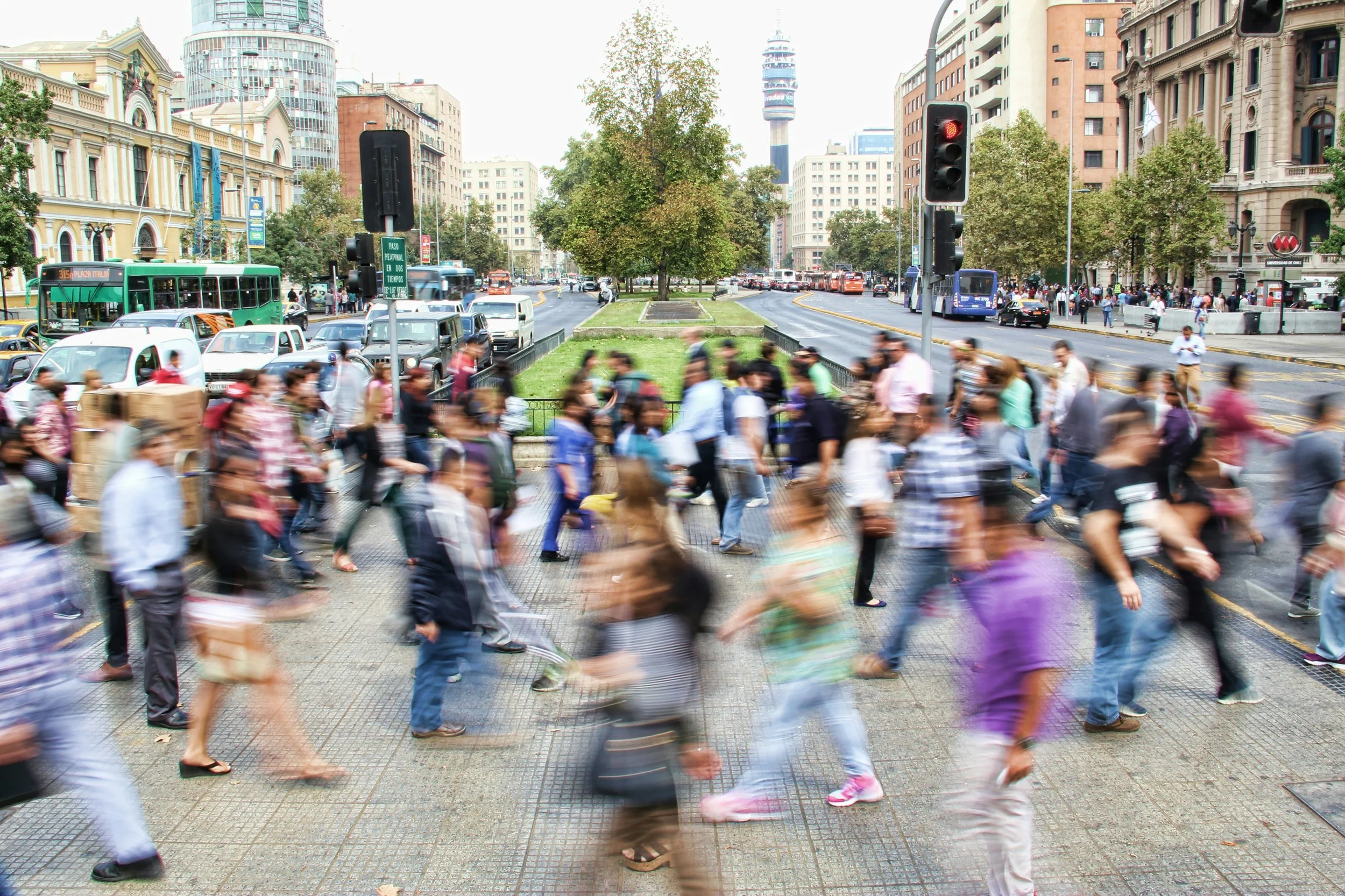
Photo by mauro mora on Unsplash
Opinion
Written by John Priestland - 14 June 2026
Steven Spielberg's new film Disclosure Day ends at the moment when the real story would begin.
The world has just learned that it is not alone.
The revelation comes suddenly, globally and without warning. What in real life retired U.S. Army Colonel Karl Nell has termed "catastrophic disclosure" – a release of information so significant that it overturns humanity's understanding of itself almost overnight.
As the credits roll, billions of people are glued to televisions, smartphones and computer screens absorbing the news.
Then what?
Do people simply finish their coffee, return to work the next morning and carry on as before? Or does a significant minority struggle to cope with information that fundamentally challenges their understanding of reality?
That question is no longer merely philosophical. It is becoming a public policy issue.
On 8 June 2026, uNHIdden – a non-profit led by doctors and clinical psychologists, focused on the health aspects of UAP phenomena – published Preparing for Disclosure: A Public Health Framework for Paradigm-Shifting Revelations, the first systematic attempt to apply established emergency preparedness methodology to the psychological consequences of a potential disclosure event.
As Dr David Whitehouse, former BBC Science Correspondent, writes in the report's foreword: "Perhaps we will never truly be ready for the momentous change. But we need to talk before any discovery. We need a plan, now."
“Rip off the band-aid”
Many advocates of immediate disclosure dismiss concerns about public reaction with a single metaphor: "Rip off the band-aid."
It implicitly suggests limited harm. A moment of discomfort, then nothing. There is something to that argument. Humans have absorbed extraordinary paradigm shifts before. The Copernican Revolution removed Earth from the centre of the universe. Darwin removed humanity from its unique position in the natural order. Modern cosmology revealed a universe so vast that our entire civilisation is invisible within it. None of those revelations produced societal collapse. People adapted. Life continued.
The difference is that those shifts unfolded over decades or centuries and were absorbed gradually. A sudden, globally synchronised disclosure event would be unprecedented. What public health planners ask is not whether societies can adapt to transformative information, but what happens when large populations are exposed to it simultaneously.
That is the question Spielberg's film poses. And it is the question that conventional emergency planning frameworks have never seriously tried to answer.
What the evidence actually shows
No event perfectly replicates disclosure. There is no direct historical analogue for learning that non-human intelligence exists. In the absence of direct evidence, uNHIdden's preparedness framework draws on the closest comparable events available: large-scale emergencies that share some of the relevant psychological mechanisms.
After Fukushima, physical health effects, while real, were more limited than initially feared. But elevated levels of anxiety, depression and post-traumatic stress persisted in affected communities for years, driven not primarily by radiation exposure but by uncertainty, displacement and a collapse of trust in official communications. Across Hurricane Katrina, the September 11 attacks, Grenfell Tower and COVID-19, the same pattern recurs: psychological consequences can outlast, and in some respects exceed, the immediate physical health burden placing unexpected strain on health services inadequately prepared to manage them.
The analogy is imperfect. None of those events challenged humanity's understanding of its place in the universe. The relevant mechanism is destabilising uncertainty, the collapse of assumed frameworks and the loss of confidence in institutions. Those are precisely the mechanisms that disclosure could plausibly activate.
A landmark 2002 review by psychologist Fran Norris and colleagues, synthesising evidence from 160 disaster-affected populations, found that significant psychological distress was a frequent consequence of major disruptive events and often persisted long after the immediate aftermath. The consistent message from the disaster literature is that the psychological consequences of large-scale disruptive events are substantial, sustained and frequently underestimated by planners in advance.
uNHIdden's Health Needs Assessment suggests that several groups may face elevated risk, including individuals with strong STEM identities, people with deeply held religious beliefs, those with existing mental health vulnerabilities and experiencers. Applying cautious assumptions from the disaster literature produces a planning range of approximately 3.5% to 10.6% of adults who might benefit from some form of psychosocial support following a significant disclosure event. These are planning assumptions, not forecasts, but they are sufficiently large to merit attention.
The information problem
Disclosure would occur in a frenzied information environment.
A landmark 2018 study by researchers at the MIT Media Lab found that false information spreads significantly farther, faster and more broadly than true information online, driven primarily by human behaviour rather than automated bots. In a disclosure context, where official information would inevitably be incomplete and highly charged, the first narrative many people encounter may not be the correct one. Official communications themselves, if poorly framed, risk being iatrogenic – compounding distress rather than containing it.
The information gap would heighten anxiety. People craving certainty to regain a sense of control will accept a fast lie.
The trust problem
The challenge is compounded by trust.
A substantial proportion of the public already believes governments have not been fully transparent about UAPs. Research by Smith and Freyd on institutional betrayal – the harm caused not just by underlying events but by the violation of trust in institutions expected to offer protection and honest communication – suggests that where that trust is absent, distress in crisis conditions tends to be significantly higher and recovery significantly slower.
If disclosure involves information that citizens feel should have been released earlier, the psychological impact may not simply be astonishment. It may also include anger. And anger, in a high-velocity information environment, is a fuel that misinformation burns very efficiently.
Shifting the mean
British epidemiologist Geoffrey Rose established one of the foundational principles of public health: a large number of people exposed to a small risk often generate more total harm than a small number of people exposed to a large risk.
Applied to disclosure, that means everyone is affected, not just the vulnerable. Preparedness is not primarily about crisis response, it is about building population-level psychological resilience before any event occurs. The Preparedness Plan proposes practical measures that can be taken now: reducing stigma, strengthening resilience, developing trusted information networks, improving mental health preparedness and encouraging collaboration between healthcare professionals, researchers, government and civil society.
All would strengthen society's capacity to respond to a wide range of crises, not just this one.
A Black Swan worth taking seriously
In the United Kingdom, the Cabinet Office Resilience Directorate has been moving towards risk methodologies that place greater emphasis on consequences and preparedness rather than simple probability calculations. The Royal Academy of Engineering's review of the National Security Risk Assessment explicitly recommended that planners focus on impact, explore uncertainty and consider a wider range of scenarios – a shift designed precisely for low-probability, high-consequence events that conventional frameworks tend to underweight.
The organisations that would need to lead a public health response to disclosure are not the ones that typically feature in UAP discussions. They are public health agencies, emergency planners, healthcare systems and civil society organisations. None of them is being asked to take a position on what UAPs are. They are being asked a much more modest question: if a significant disclosure event occurred, would existing preparedness frameworks be adequate to support the populations affected?
uNHIdden intends to convene a conference in the United States in late 2026 or early 2027 to bring together public health specialists, emergency planners, mental health professionals, researchers and community organisations to explore that question further.
The public health case is ultimately a simple one. If disclosure never occurs, the capabilities required to prepare for it – stronger communities, better communication under uncertainty, greater psychological resilience and improved mental health support – will still have been worthwhile investments.
And if disclosure does occur, the difference between a prepared population and an unprepared one could be substantial.
In the crowd-pleasing excitement about craft, technology and bodies, individuals are relegated. They should not be. People matter.
John Priestland is Chairman of uNHIdden, a London-based, medically led non-profit supporting people affected by Unidentified Anomalous Phenomena. The organisation works to reduce stigma, improve access to appropriate support, and help individuals and institutions respond safely to potentially disruptive information.
You can find its newly released Preparedness Plan here.